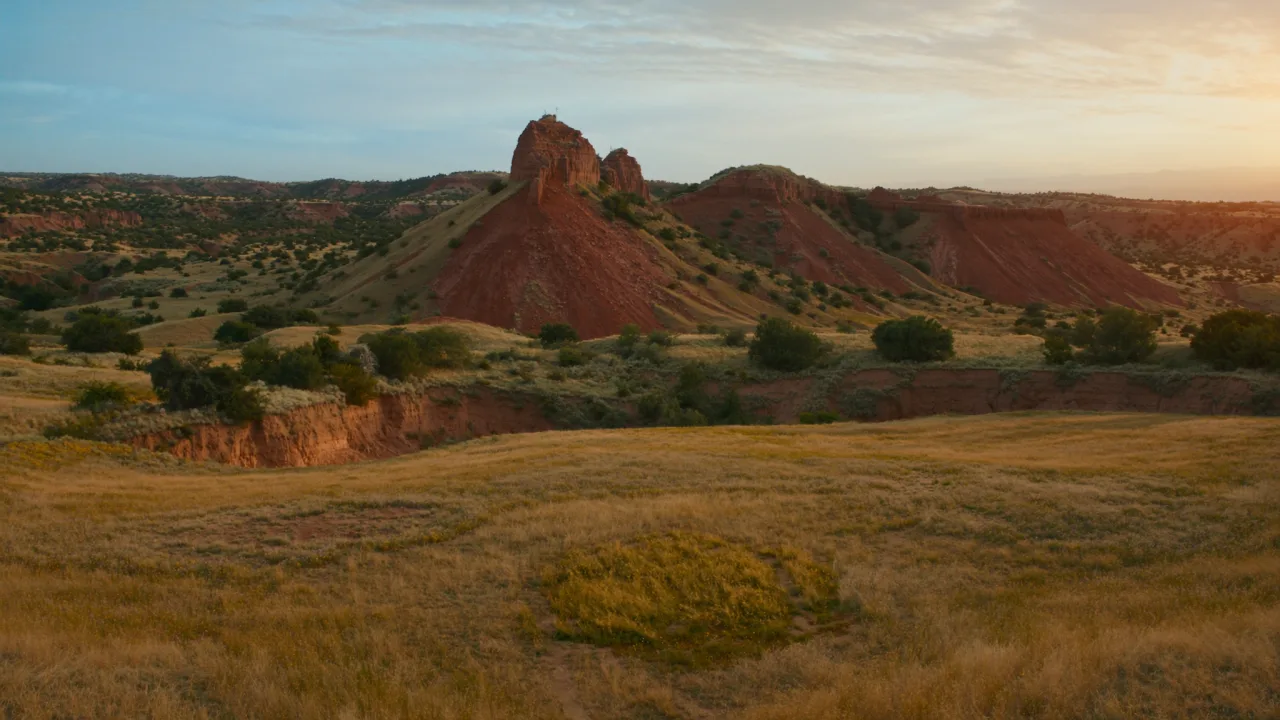
In the rolling mixed-grass prairie of western Oklahoma, Black Kettle National Grassland preserves a wide-open expanse named for a peace-seeking Cheyenne chief. Spreading across 31,300 acres, with a small 576-acre corner in the Texas Panhandle, this US Forest Service unit—part of the Cibola National Forest and National Grasslands—offers starlit solitude. By day, spot pronghorn, prairie dogs, and raptors. The Black Kettle Interpretive Trail and adjacent Washita Battlefield add history, inviting RVers to explore backroads and camp among the grasses.
Best season — Spring and fall deliver pleasant temperatures, wildflower displays, and active wildlife. Summer heat can be intense, while winter brings cold winds and possible snow.
What can you experience at Black Kettle National Grassland?
Rolling hills of mixed-grass prairie harbor pronghorn, prairie dogs, and grassland birds. After sunset, the exceptionally dark sky reveals the Milky Way. Interpretive signs recall Chief Black Kettle's story, while unimproved roads lead to quiet campsites where the only soundtrack is wind and coyote calls.
- Spot pronghorn antelope, prairie dogs, and grassland birds across the rolling prairie.
- Enjoy exceptionally dark skies and stargazing after sundown.
- Walk the Black Kettle Interpretive Trail and reflect at the nearby Washita Battlefield National Historic Site.
At a glance
The facts worth checking before you roll out
Conservative, source-minded facts for planning your visit — always worth confirming against current conditions before you travel.
Managing agency
US Forest Service — part of the Cibola National Forest and National Grasslands
Location
Mostly near Cheyenne, Oklahoma, with a small portion near Canadian, Texas (Lake Marvin Recreation Area)
Size
31,300 acres total — 30,724 acres in Oklahoma and 576 acres in Texas (as stated on the page)
Notable feature
Co-located with the National Park Service's Washita Battlefield National Historic Site; offers the Black Kettle Interpretive Trail
On the ground
Black Kettle National Grassland protects a portion of mixed-grass prairie spanning 31,300 acres, with land in both Oklahoma and Texas. Managed by the US Forest Service as part of the Cibola National Forest and National Grasslands, it honors a peace-seeking Cheyenne chief through preservation of this open landscape. The grassland offers a unique opportunity to experience expansive views and natural solitude.
RV travelers come to Black Kettle for wildlife viewing, birding, and enjoying dark night skies. Opportunities exist to explore the area by backroads, taking in the rolling hills inhabited by pronghorn and prairie dogs. Visitors can also connect with history through the adjacent site recalling a significant historical event and the Black Kettle Interpretive Trail.
Spring and fall provide agreeable conditions for visiting, marked by wildflowers and active wildlife. Summer months tend to be hot, while winter brings cold winds and potential snowfall. These seasonal shifts influence both comfort and opportunities for observation across the grassland’s varied terrain.
Consider establishing a basecamp in a nearby community before venturing into Black Kettle National Grassland. From there, RVers can explore the 31,300 acres with ease, choosing between developed options or dispersed camping amongst the grasses. This approach allows flexible access to both the grassland and surrounding attractions.
Official sources
- U.S. Forest Service — Black Kettle National Grassland USDA Forest Service
Nearby & related
Keep planning Oklahoma
Sourced costs, campground directories, and the places worth a detour — the next layer of Oklahoma trip planning.
Planning an RV trip near Black Kettle National Grassland: An RV Traveler's Guide?
Was this guide helpful?