 PickRV
About Ski / Wakeboard
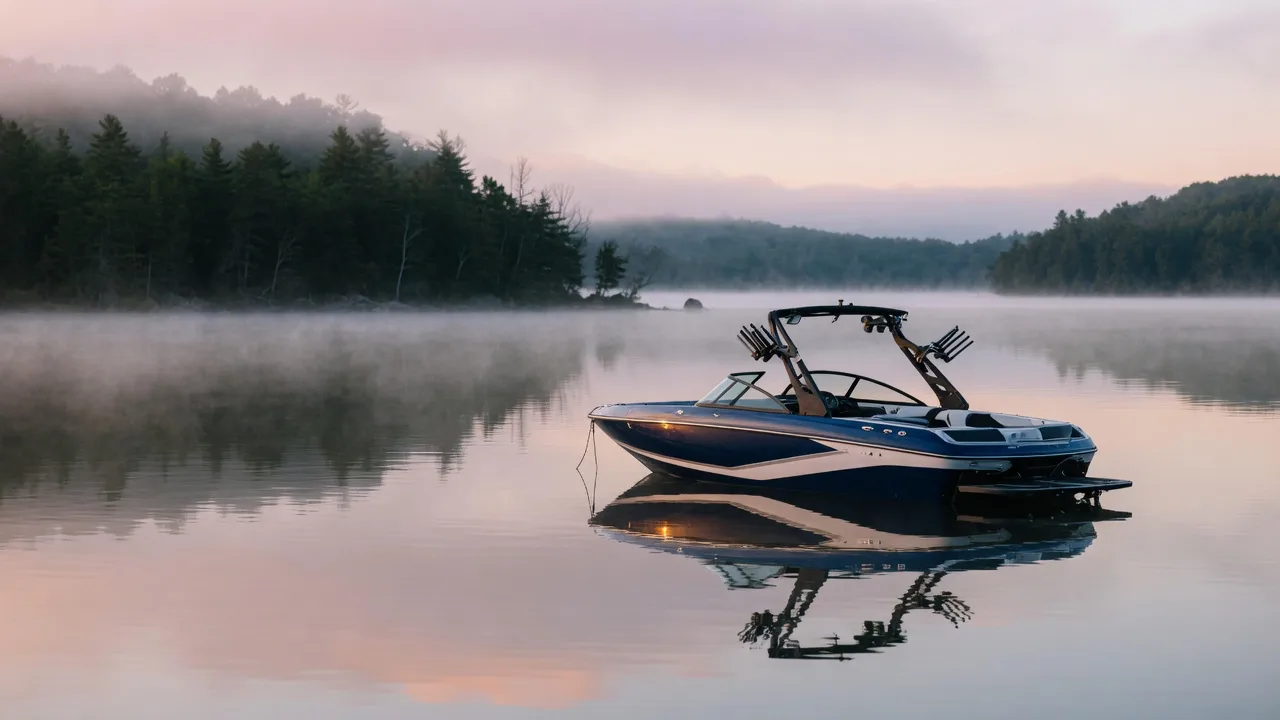
Ski and wakeboard boats are inboard-powered hulls shaped to throw a deliberate wake. Modern wakeboats add ballast tanks (often 1,000-3,000 lb of water sealed in compartments) to drop the stern and grow the wake further. The boat is built around the rope — most do not double well as cruising boats.
Length range
20-24 ft
Passenger range
8-14 passengers
Per-day price
$450-$1200
License & USCG context
Same NASBLA state requirements as other powered boats. Inboard engines require careful starting procedure (key on, bilge blower for 4 minutes, then start) — the listing will require a walkthrough on first-time inboard renters. PickRV does not allow renter-operated wakesurfing behind a non-wake-shaped hull (the prop is exposed at the surfer's distance).
When Ski / Wakeboard wins
Glass-water mornings on a wakeboard lake (early before the wind picks up). Slalom course rentals where the lake has a permanent slalom buoy set. Multi-day waterski camps. Boat-to-boat 'session' style days where a group rotates pulls.
When Ski / Wakeboard loses
Casual family days (the seating is built around the tower not the cooler). Saltwater (inboard engine seawater intake adds failure modes). Slow cruising at displacement speed (the boat is shaped to plane, idling overheats some inboard engines).
What official guides don't tell you
PickRV — first-hand context that the manufacturer + USCG manuals skip.
- 1
Ballast empty/full state changes fuel economy by 25% — empty the tanks for the run home if you are on a long stretch of water.
- 2
Wakeboard tower height affects bridge clearance — typical loaded wakeboats are 8-9 ft above the waterline. Check overhead height at your launch ramp.
- 3
The 'Perfect Pass' system common on premium ski boats holds boat speed to a programmed value (28-36 mph for slalom). Learn the controller before the first pass — renter manuals often skip this.
- 4
Wakeboard rope length is the variable, not the boat speed. Standard line is 65 ft; tournament line goes 70-75. Hosts vary on what they include.
- 5
Inboard transmissions can be expensive to repair — drop the throttle to neutral before shifting from forward to reverse, never slam through neutral.
Ski / Wakeboard — the long version
Ski and wakeboard boats are the precision instrument of the rental fleet. Where a pontoon is a floating room and a houseboat is a floating apartment, the wakeboat is a tool — a 22-foot hull purpose-built to throw a wake that a rider behind a 65-foot line can carve. PickRV's wakeboat listings concentrate on the slalom-course lakes (private cable parks + clear-water reservoirs) and the family-ski lakes (Hill Country Texas, Lake Lanier, Powell, Tahoe, Norris). The pricing reflects the precision: a premium wakeboat with full ballast, Perfect Pass speed control, and a tower runs $800-$1,200 per day in summer. The pricing also reflects the operator skill: most hosts require a phone interview before approving first-time inboard renters, and several require the renter to upload a short video proving they can drive the boat at the dock. The honest version of wakeboat rental: it is the most expensive sub-type per hour of use, and the only one where the booking ROI depends almost entirely on whether someone in the group can actually wake-ride.
Honest pros
- +Wake quality — modern wakeboats throw a kicker that an intermediate wakeboarder cannot replicate behind a v-drive or stern-drive cruiser.
- +Speed control — Perfect Pass + GPS-based servos hold 28-36 mph within 0.1 mph for slalom course passes. The renter sees consistent runs.
- +Tower — wakeboards stow on the tower, the rope launches from the tower, and the speaker bar mounts to the tower. Everything about the boat lives on the rope.
- +Resale — wakeboats hold value, which means rental fleets keep current models. The renter gets a 2024-2026 hull, not a 2010 boat.
- +Community — wake culture is collaborative. Hosts often connect renters with local riders for sessions.
Honest cons
- -Cost — daily rate is 2-3x a comparable pontoon. The math only works if 4+ riders rotate.
- -Seating — the cockpit is built around the tower and rope, not the cooler and cushion. Casual passengers sit elsewhere.
- -Inboard maintenance — inboard engines need careful starting (bilge blower 4 min). Renter walkthroughs cover this and host enforcement is strict.
- -Tower clearance — bridges and tree branches matter. Most wakeboats are 8-9 ft above the waterline.
- -Damage liability — props, towers, and ballast pumps are expensive. Coverage for wakeboats typically costs more than for pontoons, so budget accordingly for the coverage you arrange.
USCG / NASBLA / industry docs that matter
Federal law requires lanyard use on all open-cockpit boats under 26 ft. Wakeboat operators are explicitly within scope.
Industry baseline for slalom course safety, ski rope condition, and tower load ratings.
Some states (e.g., MN, MI) post no-wake zones near loon nests and shorelines. Wakeboat operators must know the local rules.
Ski / Wakeboard + camping
Wake + camping pairs cleanly: morning glass-water session, midday campground siesta, evening dock party. PickRV's camping vertical lists campgrounds within 5 mi of premier wake lakes like Tahoe, Powell, Cumberland.
Cross-link mesh
Related PickRV verticals + destinations that pair with Ski / Wakeboard.
Wake riders typically session early morning before wind, then break to a lakeside campground for the afternoon. The camping vertical maps the combos.
Some lakes (Powell, Mead, Norris, Cumberland) have permanent slalom course buoys. The destination pages flag this.
Riders session at dawn and want a campground within reach of the ramp by afternoon. The trip planner sequences the lake, the rig and the overnight stop, and shows what the run costs before anything is booked.
Looking for a rig in your area?
Pick your state and add your email — one email when a rig is listed there, nothing else, no spam.
Primary source citation
USA Water Ski & Wake Sports — equipment safety standards (industry, cite as third-party)PickRV cites .gov / federal / recognized industry sources. Third-party sources (BoatUS, ASA, etc.) are cited as third-party — not as authority.