 PickRV
About Pontoon
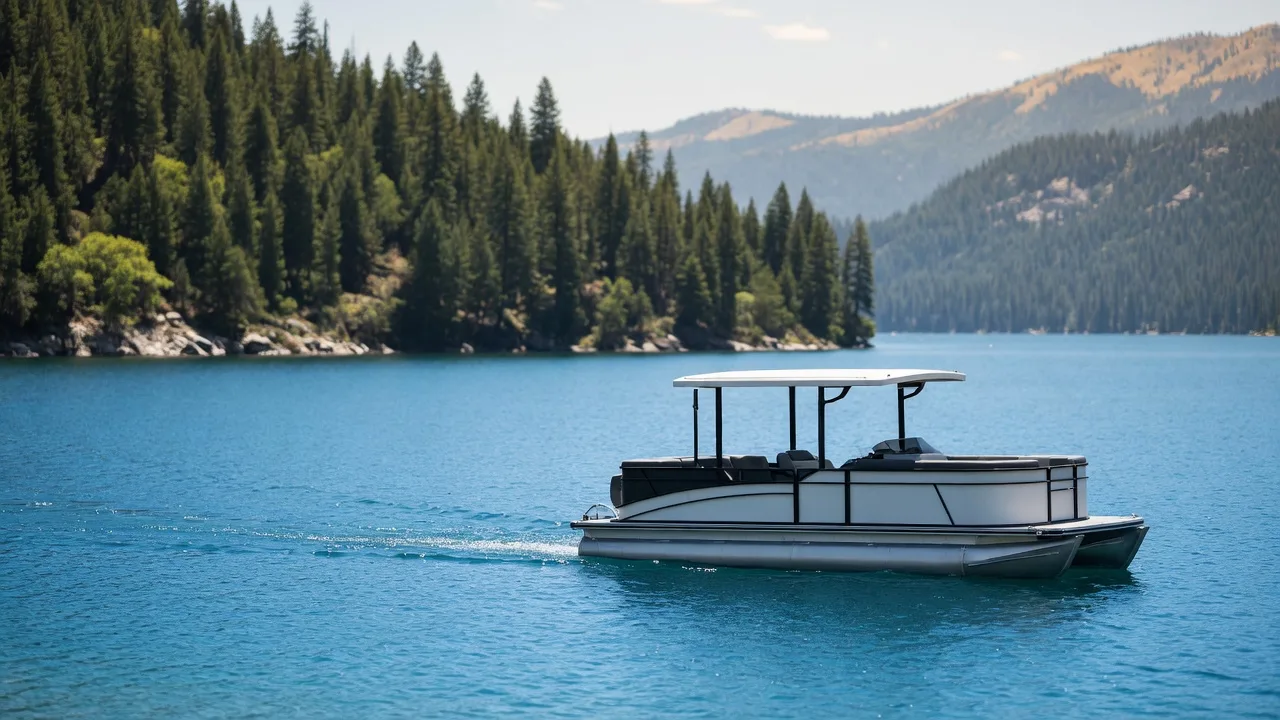
Pontoon boats sit on twin (or tri-toon) aluminum tubes that float the deck above the waterline. The flat platform makes them the easiest powered boat to drive — they steer like a slow car, dock like a slow car, and forgive the occasional bump against the cleat. They lose on choppy water (the flat bow pushes water instead of cutting it) and on speed, but for inland-lake family days they are the format that wins most often.
Length range
16-26 ft
Passenger range
8-14 passengers
Per-day price
$240-$650
License & USCG context
Most US states require a Boater Education Card (NASBLA-approved online course, $30-50) for operators born after a state-specific cutoff date — often 1988 or later. A small number of states (Alaska, Wyoming, Arizona) have no statewide education requirement for pontoon operation. The PickRV listing page shows the requirement for your pickup state before you book.
When Pontoon wins
Calm inland lakes with sandy beaches. Multi-generation family trips where grandparents and toddlers share the deck. Sunset cruises with food and drink (the deck holds the cooler upright). Anchor-and-swim afternoons where the boat is a floating dock more than a transportation tool.
When Pontoon loses
Big-water chop (anything past a 12-knot wind). Long-distance cruising (top speed typically 18-25 mph at 50% throttle, fuel economy is brutal at WOT). Saltwater inshore (the aluminum tubes corrode without regular flush). Pulling skiers — the lighter pontoon models cannot generate the wake for slalom.
What official guides don't tell you
PickRV — first-hand context that the manufacturer + USCG manuals skip.
- 1
Pontoon fuel economy at idle (trolling) is roughly half a gallon per hour — most renters worry about fuel and don't need to.
- 2
Tri-toon pontoons (three tubes instead of two) handle chop noticeably better and turn tighter — worth the upcharge if your lake gets afternoon wind.
- 3
Most rental pontoons come with a top (bimini) that is rated up to 18 mph — at higher speeds the canvas can rip. Drop the top before you open the throttle.
- 4
The bow gate latch fails first on used rental pontoons. Visually check it during walkthrough, and re-check after every time someone steps off at a beach.
- 5
Pontoon liability coverage typically costs less than ski-boat coverage — pontoons are slower and the accident profile is lower — so renters who arrange their own coverage usually pay less on a pontoon.
Pontoon — the long version
Pontoon rentals are PickRV's highest-volume boat category by booking count, and not by accident — the format wins for first-time renters, multi-generation family groups, and anybody who values a stable deck over hull speed. The modern pontoon has evolved from a 1950s catwalk on logs into a tri-toon platform with 200+ horsepower, hydraulic steering, and creature comforts that rival a small RV. What hasn't changed is the use case: flat-water lake days where the boat itself is the destination. The deck holds the cooler, the umbrella, the swim ladder, and the grandparents who would never set foot on a v-hull. PickRV's pontoon listings concentrate on the Upper Midwest lake belt (Minnesota, Wisconsin, Michigan), the southern impoundments (Texas Hill Country, Tennessee, Kentucky), and the Florida inland chain. Hosts price per-day, per-half-day, and per-week — the listing surfaces total + breakdown before checkout, so the renter sees fuel, cleaning, and the transparent 10% service fee upfront, with the host keeping 100% of the base price they set. The honest version of pontoon rental: you will move slowly, you will use a lot of fuel relative to distance covered, and you will not regret a minute of it.
Honest pros
- +Stability — the twin-tube architecture eliminates the heel of a monohull. Toddlers walk the deck without falling.
- +Capacity — most rental pontoons seat 10-14 comfortably. The Sunday brunch cruise on a pontoon is mathematically cheaper per-person than a ski boat.
- +Operator forgiveness — pontoons dock at displacement speed and bump the cleat without expensive damage. First-time renters succeed.
- +Shade — the bimini top is standard. Sunburn is the silent ruin of every poorly-equipped lake day.
- +Adaptability — the deck handles fishing, swimming, picnicking, and sunset cocktails without reconfiguring.
Honest cons
- -Speed — at 25 mph you are pushing the limit. The wake is wet and the fuel burn is brutal at WOT.
- -Choppy water — the flat bow pounds in anything past 12-knot wind. Plan for morning departures.
- -Saltwater corrosion — aluminum tubes need flushing. Most coastal listings restrict the pontoon to bay use only.
- -Wakeboarding — pontoons cannot generate the wake. Renting a pontoon for skiing is the wrong format choice.
- -Storm-finding radar — pontoons offer no shelter past the bimini. The afternoon thunderhead on a Texas lake is real risk.
USCG / NASBLA / industry docs that matter
Equipment baseline for any pontoon over 16 ft. Renters should walk through the safety locker on day one and confirm count + type matches passenger list.
Identifies which state requires the boater card by birth-year cutoff. PickRV's listing page surfaces the requirement for your pickup state at checkout.
A float plan filed with a shore contact saves hours in a search-and-rescue scenario. Pontoons on big lakes (Tahoe, Powell, Lake of the Woods) benefit most.
Pontoon + camping
Pontoon + lakeside camping is the classic Upper Midwest combo — pontoon by day, campfire and stars by night. PickRV's camping vertical at /camping cross-references campgrounds with marina proximity (under 5 mi).
Cross-link mesh
Related PickRV verticals + destinations that pair with Pontoon.
Most pontoon trips pair with an overnight at a lakeside campground or cabin. The camping vertical maps the legal sites by state.
Lake fireworks, regatta weekends, and float-in events draw pontoons. The events calendar shows which state has what when.
Pontoon trips often start with a 200-mile drive from the urban renter's home. A camper van handles the drive + the overnight if the cabin is booked.
Looking for a rig in your area?
Pick your state and add your email — one email when a rig is listed there, nothing else, no spam.
Primary source citation
US Coast Guard — recreational boating safety + required equipmentPickRV cites .gov / federal / recognized industry sources. Third-party sources (BoatUS, ASA, etc.) are cited as third-party — not as authority.