Fuel + logisticsCited official sources
RV cell coverage by carrier
Verizon, AT&T, T-Mobile by region + reality.
Cellular coverage in remote US areas varies dramatically by carrier. Verizon historically leads for rural coverage; AT&T strong in many regions; T-Mobile improving but still weaker in rural areas. RV travelers commonly use multiple carriers (Verizon + AT&T) to maximize coverage. This guide covers the regional reality.
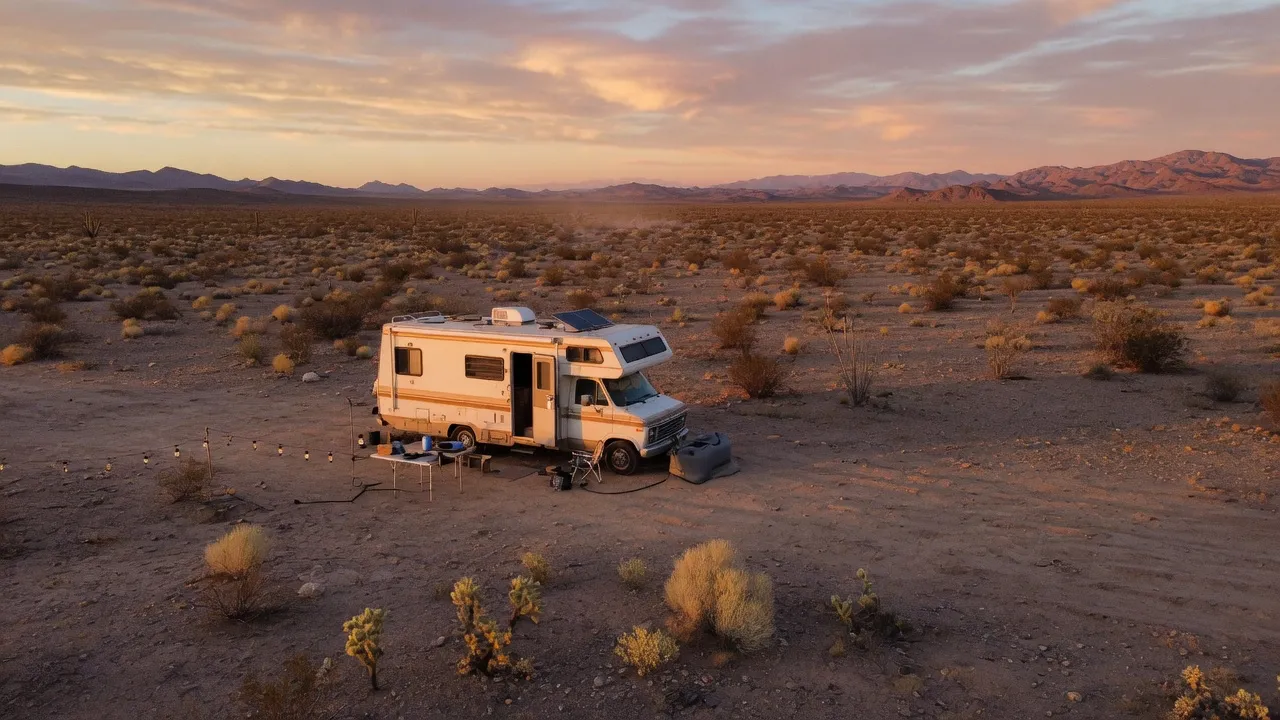
Frame: a general RV subject photograph — not a place on this route.
- Tier
- Fuel + logistics
- Sources
- Cited official (.gov / .org)
Which cell carrier has best RV coverage?
Verizon for rural and Western US coverage. AT&T for Eastern US and many tourist destinations. T-Mobile has improved with C-Band 5G but remains weaker in true remote areas. The practical strategy: carry both Verizon and AT&T (separate phones or hot spots). Many RV travelers use mobile hotspots with Verizon as primary and AT&T as backup. The FCC National Broadband Map shows official carrier coverage.
- Verizon: best rural + Western US
- AT&T: strong East + tourist areas
- T-Mobile: weaker rural
- Carry 2 carriers for redundancy
- FCC Broadband Map for verification
Regional reality
Pacific Northwest: Verizon dominant, AT&T good in Seattle metro + corridors.
Mountain West (CO, UT, MT, WY): Verizon dominant. AT&T thin in remote areas.
Desert Southwest (NM, AZ, NV): AT&T + Verizon both strong. T-Mobile thinner.
Texas: AT&T strong + Verizon strong. T-Mobile competitive in cities.
Southeast: AT&T historically dominant. Verizon competitive. T-Mobile improving.
Northeast: Verizon + T-Mobile both strong. AT&T good.
Midwest: Verizon dominant rural.
Alaska: Verizon partial. AT&T partial. GCI Alaska is the Alaska-specific carrier.
Hawaii: All three OK in metro areas. Spotty in remote areas.
What FCC + carrier marketing doesn't tell you
Carrier marketing maps are optimistic. FCC National Broadband Map is more accurate but lags real coverage by some months.
RV travelers report Verizon as the most reliable single carrier for boondocking and rural travel.
Frequently asked questions
- Should I use Starlink?
- For true off-grid RVs, Starlink Roam ($150/month) is increasingly popular. Setup time + electricity required.
Authoritative sources
Verify current conditions with state DOT 511 systems before departure. RV restrictions may change. Weather may close roads.
Planning an RV trip along RV cell coverage by carrier?
Was this guide helpful?