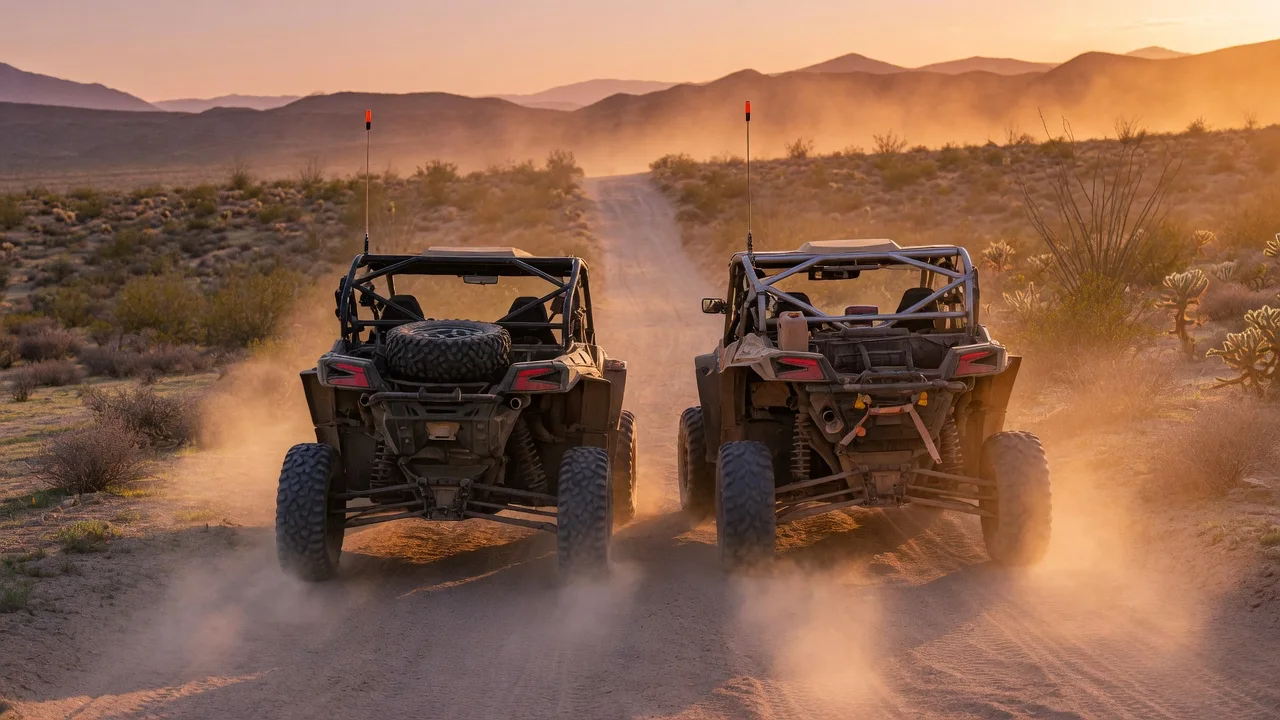
Host + vendor insurance
Insurance for Off-Road Hosts — Underwriting and Customer Selection
Educational only · not insurance advice. PickRV is not an insurance broker, agent, producer, or carrier. Coverage varies by carrier and policy. Verify any decision with a licensed insurance professional in your state.
TL;DR
Off-road host insurance requires specialty underwriting because off-road use is excluded from most standard policies. Hosts can carry policies with off-road endorsements (specialty market) and impose renter qualification requirements (off-road experience, route disclosure, route authorization). Premium is higher; claim frequency on off-road rentals is also higher.

The boundary
Where this coverage stops

Covered
4- Specialty commercial RV insurance with off-road endorsement.
- Authorized off-road route documentation.
- Renter qualification and experience verification.
- Higher liability limits for off-road exposures.
Not covered
3- Off-road use beyond the policy's authorized terrain.
- Renter operations outside the contract's authorized routes.
- Acts of recklessness (rock crawling beyond skill level, water crossings).
In practice
Real-world examples

Anonymized composite scenarios illustrating typical outcomes.
Off-road host's pre-trip route briefing prevented claim escalation
An off-road host (Utah 4x4 fleet) requires a 60-minute pre-trip briefing: route review, terrain types, vehicle capability limits, recovery procedures. A renter on the White Rim Trail sustained $4,200 in undercarriage damage from rock contact within the authorized route. The host's specialty off-road insurance paid after the $1,500 deductible.
Outcome: Renter out-of-pocket: $1,500. Host out-of-pocket: zero (paid by specialty insurance). Pre-trip briefing prevented disputes about which routes were authorized.
The money
Cost ranges

Industry-typical pricing from published carrier and industry sources. Actual quotes vary by state, vehicle, and driver history.
Higher than standard commercial; off-road risk is higher.
One-time consultation with off-road insurance specialist.
Fine print
What insurance companies don't say

Industry insider knowledge surfaced for educational transparency.
Off-road renters must be qualified
Off-road hosts typically require renter experience verification, optionally a skills demonstration, and signed route authorization. Unqualified renters cause most off-road claim losses.
Route authorization is critical
Standard rental contracts may not authorize specific off-road routes. Off-road hosts use explicit route-authorization sheets — signed by the renter at booking — that list approved routes. This documentation is critical at claim time.
Recovery is part of the operation
Off-road claims often involve recovery (winching, extraction). Off-road hosts typically have recovery vendor relationships and policy coverage for recovery costs. Standard rigs do not.
FAQ

Can I host an off-road rig?
Yes — but you need specialty commercial insurance with off-road endorsement, qualified renter selection, and clear route authorization.
Where do I find specialty off-road insurance?
Specialty insurance brokers serving the off-road / overland market. Examples include certain niche commercial RV insurers and broker networks. Mainstream insurers do not typically offer off-road endorsements.
What if my renter goes off the authorized route?
Coverage may be voided. Pre-trip route authorization (signed by renter) is the host's defense. If the renter violates the authorization, the renter is personally liable.
Are there specific renter qualifications?
Yes — most off-road hosts require off-road experience, sometimes a skills test, and full briefing acknowledgment. Insurance carriers may require these as conditions.
How much higher is off-road insurance?
Typically 2-3x standard commercial RV insurance premium. The off-road claim frequency is much higher.
When to consult a broker

Talk to a licensed insurance professional and a commercial-use specialist before you list any off-road vehicle on a marketplace. Commercial-use insurance for vehicles listed on peer-to-peer marketplaces is its own underwriting category; many personal-policy gaps surface only at claim time.
Sources
- [1]III — Facts + Statistics — RV / recreational vehicle industry stats
- [2]III — Collision and Comprehensive Coverage — Collision and comprehensive explainers
- [3]NAIC — Consumer Insurance Search — Consumer regulator + complaint portal
- [4]U.S. Small Business Administration — Business Insurance — Small business + commercial insurance
- [5]III — Rental Car Insurance — Rental vehicle coverage
Your next step
Now the thing you were going to insure
Coverage only makes sense against a specific rig and a specific week — the deductible on a 30-foot Class C is not the deductible on a towable. Start from what you would actually drive.
What you'll see there
Nothing is bookable on PickRV yet — the search page says so in those words. What it shows instead are labelled sample rigs, so you can see what a listing looks like before there is one to book.
What you'd pay
The complete price sits on every listing, and the exact total is itemized before you pay — nothing appears at the last step.
If plans change
Full rental refund 48h+ before pickup on every booking, in every state.
Tell us when you want to go.
Nothing is bookable today. Dated requests are what we take to owners, so give us the window you actually want — you get one email the day a rig covers it, and nothing else.