Comparison + decision
Your Own Auto Insurance vs CDW — When Each Wins
Educational only · not insurance advice. PickRV is not an insurance broker, agent, producer, or carrier. Coverage varies by carrier and policy. Verify any decision with a licensed insurance professional in your state.
TL;DR
Your personal auto insurance and the rental's CDW are alternative paths to physical-damage protection. Personal auto wins when (1) the policy explicitly extends to the rental class, (2) the deductible structure is favorable, and (3) you rent frequently. CDW wins for one-time renters, motorhome classes excluded from personal auto, and renters who want capped per-trip exposure.

The boundary
Where this coverage stops

Covered
3- Personal Auto Extension: Annual premium covers all rentals where extension applies; deductible follows your personal policy
- Rental CDW: Per-trip premium; capped exposure at deductible; covers vehicle classes personal auto excludes
- Hybrid (Personal + CDW): Layered protection; personal auto primary if extends, CDW for gaps
Not covered
4- Endorsement of any specific carrier — comparisons are based on publicly available product literature.
- Quotes — actual premiums vary by state, vehicle, driving history, and individual underwriting.
- Out-of-date pricing — published rates change frequently.
- Coverage in states where one carrier does not write business.
In practice
Real-world examples

Anonymized composite scenarios illustrating typical outcomes.
Renter with motorhome-excluding personal policy — CDW wins clearly
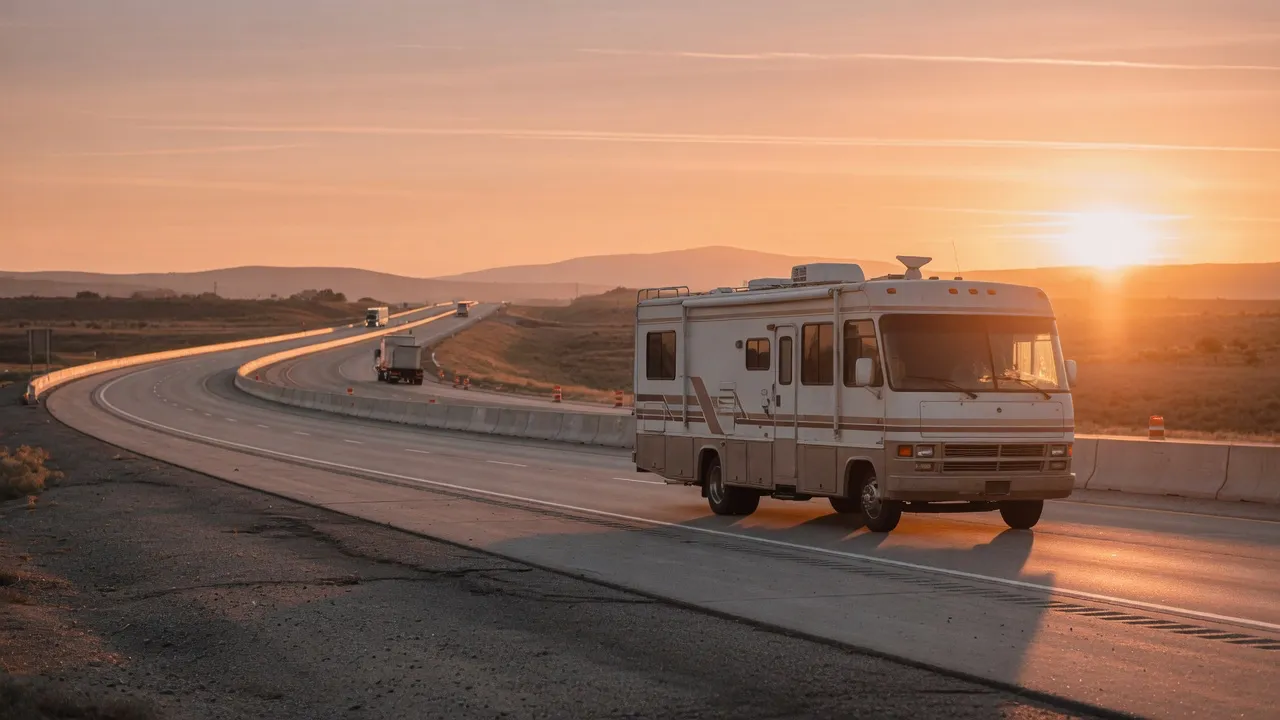
A renter's personal auto policy explicitly excluded motorhomes per the permissive-use clause. On a 5-day Class C rental, CDW at $24/day ($120 total) was the only physical-damage protection available. A minor incident caused $1,500 in damage; CDW capped exposure at the $500 deductible.
Outcome: Renter out-of-pocket: $500. Without CDW: $1,500. CDW won by $880 net of premium.
The money
Cost ranges

Industry-typical pricing from published carrier and industry sources. Actual quotes vary by state, vehicle, and driver history.
Marginal cost of permissive-use extension; usually no add-on premium.
Industry-typical.
Fine print
What insurance companies don't say

Industry insider knowledge surfaced for educational transparency.
Personal auto's silent extension
Most personal auto policies extend liability and physical damage to short-term rentals of similar vehicle classes — at no add-on premium. The 'silent extension' is the cheapest physical-damage coverage available — but only for vehicle classes the policy explicitly covers.
Motorhome exclusion is the silent killer
Most personal auto policies exclude motorhomes, Class A rigs, vehicles over specific weight/length, and any commercial-use rental. Renters relying on personal auto extension routinely discover the exclusion at claim time.
Hybrid often the safest choice
Even when personal auto extends, layering CDW captures coverage in scenarios the personal policy doesn't (off-road, specialty use, vehicle classes near the exclusion boundary). The marginal CDW premium often justifies the gap closure.
FAQ

How do I confirm my personal auto extends?
Call your carrier and ask for written confirmation of permissive-use coverage for the specific rental vehicle class. Most carriers will email a coverage letter.
Will CDW raise my personal auto rates?
No — CDW is a contractual waiver, not insurance. Claims under CDW do not appear on your personal auto record.
Should I always buy CDW?
For inexperienced renters and high-value rigs, usually yes. For frequent renters with strong personal coverage, often no. Run the four-factor framework per trip.
Does declining CDW void my personal extension?
No — declining CDW typically does not affect your personal auto coverage. Confirm with your carrier.
What about credit card coverage as a third option?
Credit card coverage rarely extends to motorhomes; verify in writing before relying on it.
When to consult a broker

Talk to an independent broker before making any final carrier decision. Compare your personal auto's permissive-use clause against the rental classes you most often book. Premiums and product features change; what is true this quarter may shift at next renewal. NAIC complaint ratios and AM Best ratings are the long-term indicators.
Sources
- [1]III — Rental Car Insurance — Rental vehicle coverage
- [2]III — Auto Insurance Basics — Auto insurance basics
- [3]NAIC — Auto Insurance Buyer's Guide — Auto insurance coverage explained
- [4]III — Collision and Comprehensive Coverage — Collision and comprehensive explainers
- [5]NAIC — Consumer Insurance Search — Consumer regulator + complaint portal
Your next step
Now the thing you were going to insure
Coverage only makes sense against a specific rig and a specific week — the deductible on a 30-foot Class C is not the deductible on a towable. Start from what you would actually drive.
What you'll see there
Nothing is bookable on PickRV yet — the search page says so in those words. What it shows instead are labelled sample rigs, so you can see what a listing looks like before there is one to book.
What you'd pay
The complete price sits on every listing, and the exact total is itemized before you pay — nothing appears at the last step.
If plans change
Full rental refund 48h+ before pickup on every booking, in every state.
Tell us when you want to go.
Nothing is bookable today. Dated requests are what we take to owners, so give us the window you actually want — you get one email the day a rig covers it, and nothing else.